 Save to Pinterest
 I discovered this bowl during one of those late-night scrolls that turned into a kitchen obsession. Emily Mariko's version floated across my screen, and something about the simplicity of it—warm rice, flaked salmon, creamy avocado, all wrapped up in a crispy seaweed sheet—felt like permission to stop overthinking lunch. The first time I made it, I used yesterday's rice straight from the fridge and couldn't believe how the warmth from the microwave turned it into something that tasted almost like a composed sushi experience, but easier and more forgiving. It became my go-to when I wanted something that felt special without the fuss of rolling.
My partner walked in one evening while I was assembling these bowls, and instead of the usual 'what's for dinner' question, he sat down immediately and started eating it like a hand roll. There's something about the ritual of wrapping salmon rice in seaweed, the way it crackles in your mouth, that makes even a weeknight feel a little celebratory.
Ingredients
- Salmon fillet: Cooked and flaked salmon brings richness and protein to the bowl; it stays moist when warmed gently and distributes flavor throughout.
- Short-grain rice: Day-old rice works best because it's chilled and separate, not sticky; warm it just enough to release its warmth into the other components.
- Japanese mayonnaise: Kewpie has a subtle sweetness and silkier texture than regular mayo, creating creaminess without heaviness.
- Soy sauce: It seasons both the rice and salmon with umami depth; a tablespoon gets worked through the warm rice first.
- Sriracha: This brings controlled heat and a touch of garlic-forward flavor; balance it to your tolerance and the richness of the other ingredients.
- Avocado: Slice it just before serving to keep it bright and prevent browning; the creaminess plays beautifully against crispy nori.
- Roasted seaweed sheets: These nori snacks are your edible wrapper and add a salty, oceanic crunch that ties the whole bowl together.
- Sesame seeds: Toasted varieties bring nutty depth and a little textural surprise to each spoonful.
- Green onion: Optional, but it adds a fresh onion bite that cuts through the richness of mayo and salmon.
Tired of Takeout? 🥡
Get 10 meals you can make faster than delivery arrives. Seriously.
One email. No spam. Unsubscribe anytime.
Instructions
- Warm the rice and salmon together:
- Place cooled rice in a microwave-safe bowl and top with your flaked salmon, then sprinkle the first tablespoon of soy sauce directly over it. Cover loosely with parchment or a microwave-safe lid and heat on high for 1 to 2 minutes, until everything is warmed through and the soy sauce has started to perfume the rice.
- Add the creamy and spicy elements:
- Drizzle the warm rice and salmon with Japanese mayonnaise and sriracha in whatever proportion feels right to you. Add the remaining soy sauce if the flavors feel like they need more depth.
- Gently combine:
- Using a fork or rice paddle, fold everything together until the soy, mayo, and sriracha are distributed evenly and the rice takes on a slightly golden hue. You want to preserve some texture, not mash it into a paste.
- Top and finish:
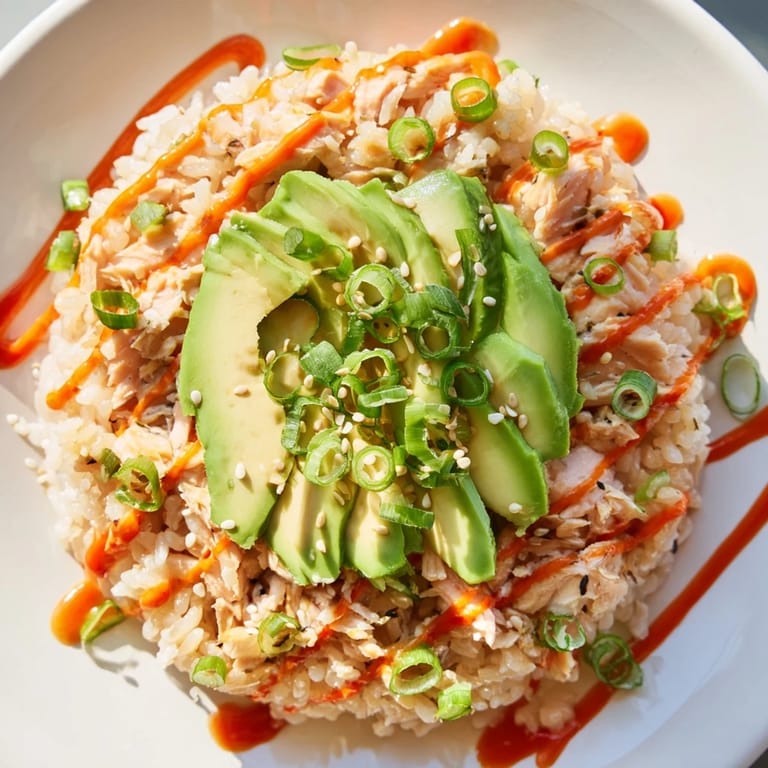
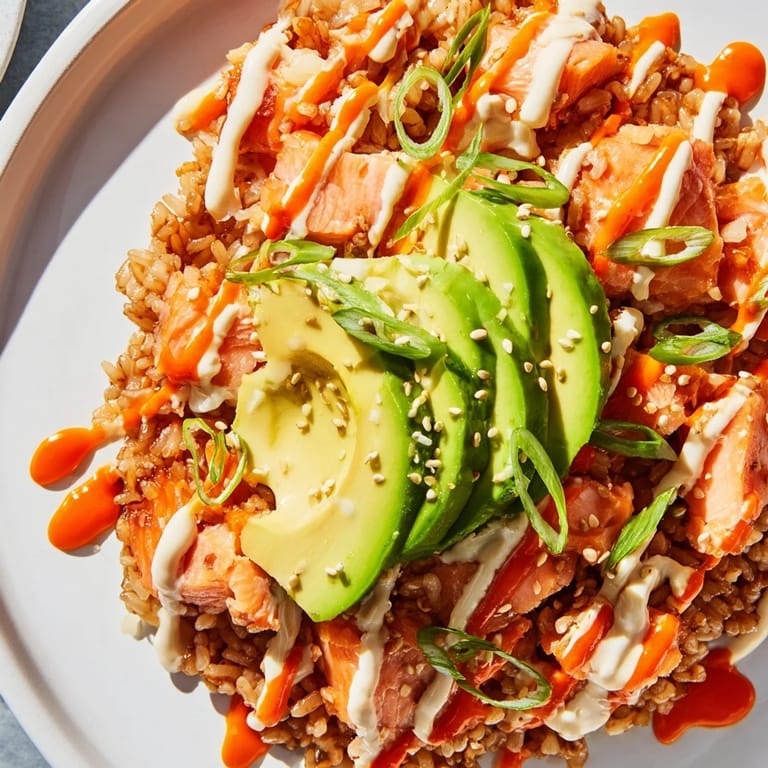
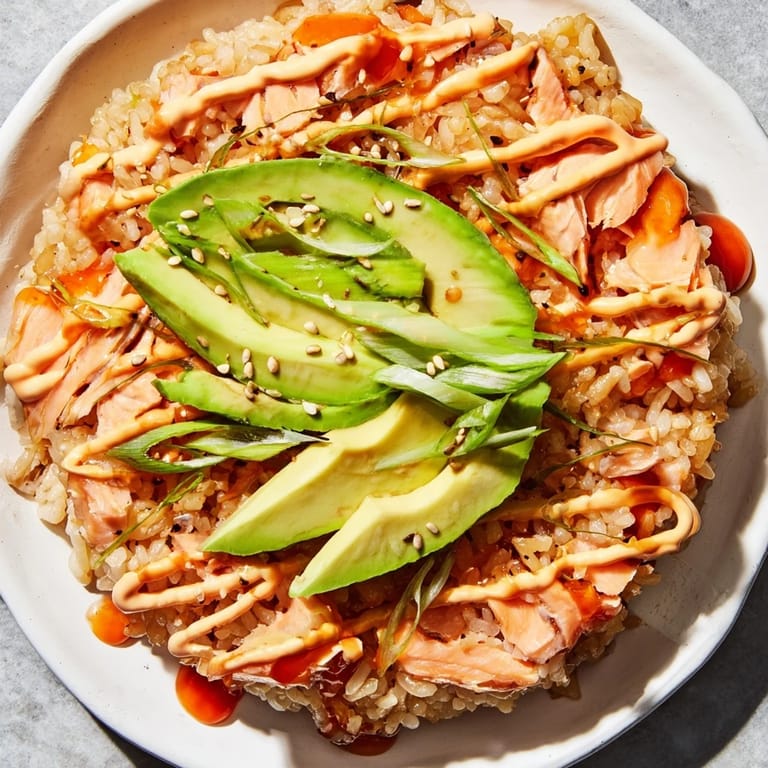
- Arrange sliced avocado over the top, scatter sesame seeds and green onion if using, then serve the bowl alongside your seaweed sheets. To eat, take a sheet of nori, scoop a generous spoonful of the salmon rice mixture onto it, and fold it into a hand roll.
 Save to Pinterest
 There's a moment when you wrap that first bite in a crispy sheet of nori, and it becomes less about a recipe and more about a small ritual—something tactile and comforting that tastes like care. It's why this bowl stopped being just a lunch and became something I crave.
The Seaweed Sheet Technique
The genius of this bowl is that it lets you eat sushi without the rolling, and it keeps the nori crispy instead of soggy. Each sheet acts as an edible wrapper and a flavor vehicle, adding salinity and that distinctive oceanic snap that grounds everything. The first time I tried it as a hand roll instead of mixing everything together, I realized how much texture you gain by keeping components separate until the moment you eat them.
Customization & Swaps
This bowl thrives on flexibility, which is partly why it spread so quickly online—everyone made it their own. I've swapped sriracha for chili crisp on nights when I wanted something more textured, used canned salmon when fresh felt too pricey, and even tossed in a soft poached egg once because I had one leftover. The foundation is strong enough that it holds up to experimentation, and the warm rice is forgiving enough to embrace whatever additions you're curious about.
Flavor Layering & The Umami Foundation
What makes this bowl feel more restaurant-quality than its simplicity suggests is the balance of umami—from the salmon, the soy sauce, and the sesame seeds working in concert. The warm rice absorbs the soy sauce like a blank canvas, while the cooled avocado and creamy mayo add richness. The sriracha's heat ties everything together and prevents the bowl from feeling flat or one-note. You're building flavor in layers rather than mixing everything at once.
- Consider adding a few drops of rice vinegar if the bowl feels too rich; it brightens everything without overwhelming the salmon.
- Furikake sprinkled over the rice before warming adds umami complexity and a subtle sweetness that deepens the soy flavor.
- If you find yourself without sesame seeds, toasted nori sheets themselves provide that nutty element, so don't skip them thinking it won't matter.
 Save to Pinterest
 This bowl taught me that some of the most satisfying meals don't require complicated technique—just good ingredients in the right balance and a moment to enjoy them. It's become my proof that simple cooking, done with intention, tastes like something worth sharing.
Common Recipe Questions
- → Can I use fresh salmon instead of cooked?
Using cooked salmon is best to ensure proper flaking and flavor. Fresh salmon would require cooking before assembling the bowl.
- → Is day-old rice necessary for this bowl?
Day-old rice offers better texture and absorbs flavors well, but freshly cooked rice can be used if cooled slightly.
- → What sauces are ideal for enhancing flavor?
Soy sauce combined with Japanese mayonnaise and sriracha balances savory, creamy, and spicy notes in the bowl.
- → Can I substitute the avocado with other ingredients?
Avocado adds creaminess, but cucumber slices or edamame can provide alternative textures and freshness.
- → How should the seaweed sheets be served?
Serve roasted seaweed sheets on the side to wrap bites of rice and salmon, mimicking sushi hand rolls.