 Save to Pinterest
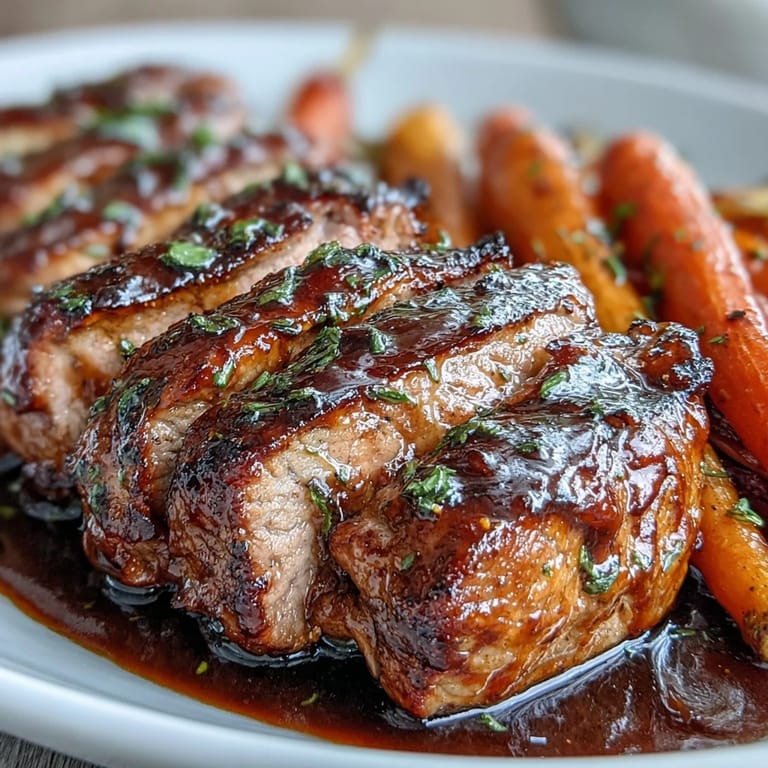
 There's something magical about opening the oven to find a pan of caramelized carrots glowing like little jewels beside a perfectly roasted pork tenderloin. My neighbor mentioned this recipe over the fence one summer evening, and I was skeptical at first—how could something so simple come together so beautifully? That first attempt taught me that sometimes the best meals happen when you stop overthinking and let good ingredients do the talking. Now whenever I make it, I'm transported back to that moment of opening the oven door and breathing in that honey-balsamic perfume.
I made this for my sister's surprise dinner party, and I remember feeling quietly confident as I pulled the pan from the oven—a rare feeling when you're cooking for people whose opinions actually matter to you. The pork was blushing pink in the center, the carrots were practically glowing, and the whole kitchen smelled like a French bistro. Everyone kept asking for the recipe, but what they really wanted was that feeling of eating something that looks far more complicated than it actually is.
Ingredients
- Pork tenderloin: This cut is forgiving and cooks quickly, which is why it became my go-to for weeknight elegance; just make sure it's trimmed of that silver skin or it'll be tough.
- Honey: The sweetness caramelizes beautifully in the oven's heat, creating depth that doesn't taste cloying if you balance it with the vinegar's tang.
- Balsamic vinegar: Use the real stuff if you can—the cheap kind tastes thin and one-dimensional, but a decent balsamic brings this dark, complex sweetness that makes people pause and ask what you did.
- Dijon mustard: This isn't just a flavor note; it acts as an emulsifier and keeps the glaze clinging to the meat instead of pooling at the bottom.
- Garlic and thyme: Fresh thyme is preferable if you have it—the dried version works fine, but fresh releases oils that make the whole pan smell alive.
- Rainbow carrots: They're not just a visual trick; each color has slightly different flavor notes, and they all caramelize at the same rate, which is kitchen magic.
Tired of Takeout? 🥡
Get 10 meals you can make faster than delivery arrives. Seriously.
One email. No spam. Unsubscribe anytime.
Instructions
- Set your stage:
- Preheat your oven to 425°F and line a large rimmed baking sheet with parchment or foil. This temperature is hot enough to caramelize without drying things out, and the parchment means you can skip the scrubbing later.
- Prep the carrots first:
- Toss your rainbow carrots with olive oil, salt, and pepper, then arrange them around the edges of the baking sheet like they're leaving space for the star. This way they cook undisturbed while the pork gets all the attention.
- Dry and season the pork:
- Pat that tenderloin dry—this is crucial because wet meat steams instead of browning. Rub it all over with oil, salt, and pepper, and place it right in the center of the pan like it owns the place.
- Make your glaze magic:
- Whisk together the honey, balsamic, mustard, garlic, and thyme in a small bowl until it's glossy and combined. This takes about a minute, and you'll immediately smell why this works so well together.
- First roast and glaze:
- Brush half the glaze over the pork and slide everything into the oven for 15 minutes. The initial high heat starts that golden crust while the carrots begin their journey to caramelization.
- The second glaze and finish:
- Pull the pan out, brush on the remaining glaze, and roast for another 10 to 15 minutes until the internal temperature hits 145°F and the carrots are tender with caramelized edges. This two-glaze approach builds layers of flavor instead of burning the first coat.
- Rest and serve:
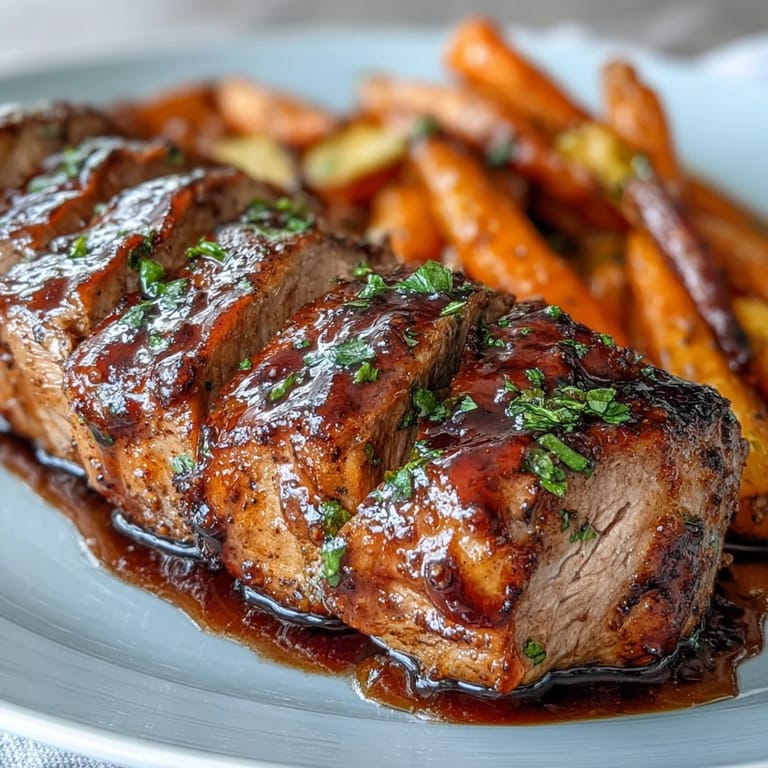
- Let that pork rest for five minutes on a cutting board—those five minutes let the juices redistribute so every slice stays juicy. Slice it up, pile everything on a plate with those pan juices drizzled over top.
 Save to Pinterest
 One night, my daughter asked to help make dinner, and we stood together at the counter mixing that glaze, and she declared it tasted like "nature's candy mixed with angry juice." That description stuck with me forever. Cooking with her that evening transformed this from just a recipe into a memory of her learning that good food comes from paying attention to what you're doing.
The Science Behind the Glaze
The magic here isn't luck—it's chemistry working in your favor. When honey hits high heat, its sugars caramelize, creating that deep amber crust and those complex flavors that make people think you spent hours on this. The balsamic vinegar's acidity cuts through the richness and prevents the whole thing from tasting like dessert, while the mustard emulsifies everything so the glaze sticks instead of sliding off. I used to think glazes were fussy until I realized they're really just sweet, salty, and acidic coming together in the heat.
Why This Works as a Complete Meal
The tenderloin gives you lean protein that cooks fast, the carrots provide natural sweetness and fiber, and the glaze ties everything together with umami depth from the garlic and thyme. There's no need for a complicated side dish—the pan juices become your sauce, and honestly, after forty-five minutes from start to finish, you're usually too hungry to fuss with extras anyway. I've served this with nothing but crusty bread and a simple green salad, and people felt like they'd eaten something special.
Timing and Temperature Tips
This recipe lives or dies by two things: your oven temperature and your meat thermometer. I've learned that ovens vary wildly, so even if yours runs hot or cool, that thermometer keeps you honest. The carrots will start softening around the 20-minute mark, which is your signal that you're on track, and by 30 to 35 minutes total, everything should be done simultaneously.
- If your carrots finish early, move them to the edges of the pan where it's cooler while the pork catches up.
- If the glaze looks like it's burning before the pork reaches temperature, tent the pan loosely with foil for the last few minutes.
- Room-temperature pork takes about 5 minutes less to cook than cold pork straight from the fridge, so plan accordingly.
 Save to Pinterest
 This dish taught me that simplicity done well beats complexity done averagely, and honestly, that's a lesson that extends way beyond the kitchen. Make it often, taste it differently each time, and you'll understand why it's stayed in my regular rotation for years.
Common Recipe Questions
- → What temperature should pork tenderloin be cooked to?
Pork tenderloin should reach an internal temperature of 145°F (63°C) for safe consumption while remaining juicy and tender.
- → Can I use regular carrots instead of rainbow carrots?
Yes, regular carrots work perfectly well. You can also substitute parsnips or add other root vegetables like sweet potatoes.
- → How long should the pork rest before slicing?
Let the pork rest for 5 minutes after roasting. This allows the juices to redistribute throughout the meat, ensuring tender slices.
- → What wine pairs well with this dish?
A light red wine like Pinot Noir complements the sweet and tangy flavors beautifully, though a dry white wine also works nicely.
- → Is this dish gluten-free?
Yes, this dish is naturally gluten-free when using verified gluten-free ingredients. Always check labels on packaged items like mustard.